


 Türkçe / TR
 English / EN
 РУССКИЙ / RU
 عربى / AR
 Deutsch / DE
 Français / FR
 Español / ES

iGA Cares Newsletter No.2
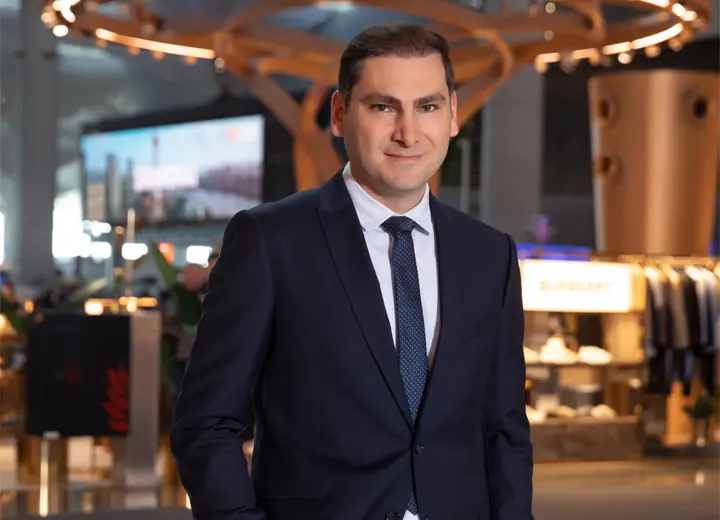
Dear Readers,
As iGA Istanbul Airport, our accessibility journey continues to be a growing transformation movement, listening to the story of each of our passengers. In our first newsletter published in May, we shared with you the current practices and inclusive steps we have taken at our airport. In this second newsletter, we want to take this journey to a more collective ground by featuring not only our own work but also valuable articles sent to us by esteemed members of the Accessible Travel Community.
For us, accessibility is not just about physical arrangements; it is an institutional culture that permeates all processes, nourished by consistency, empathy, respect, and a communication language befitting human dignity. In line with this understanding, we take an inclusive approach to every touchpoint of the experience, from terminal signage to our digital channels, from security processes to circulation areas. We work in a continuous cycle of improvement based on real experiences and feedback from the field, going beyond national and international standards.
The strong bond we have established with the Accessible Travel Community is one of the most valuable elements of this transformation. Thanks to the contributions of our guests with diverse needs, civil society organizations, academia, and industry stakeholders, we focus not only on an experience “we designed” but on a travel journey “we built together.”
Accessibility at iGA Istanbul Airport is strengthened by our employees' awareness training, supported by technology and innovation, and realized through inclusive service models. We strive to enable independent and dignified travel for our guests at every stage, from planning their journey to arriving at the airport, from their time spent in the terminal to their post-flight experience. Our goal is to make permanent an approach that not only responds to needs but also anticipates them.
I would like to express my heartfelt thanks to my colleagues who contributed to the creation of this newsletter, to all our stakeholders who generously shared their contributions, and to all our volunteers who sincerely shared their voices, experiences, and expectations with us. Each of your comments serves as a valuable guide that shapes both what we do today and the steps we will take tomorrow.
Together, we will continue to make iGA Istanbul Airport a global reference point that demonstrates that accessible, dignified, and independent travel is possible for everyone. With your contributions, as the true owners of this journey, we will steadfastly continue working toward a future where accessibility is not a privilege, but a fundamental right and an indispensable standard.
With love and respect,
Selahattin BİLGEN
CEO
İGA Istanbul Airport
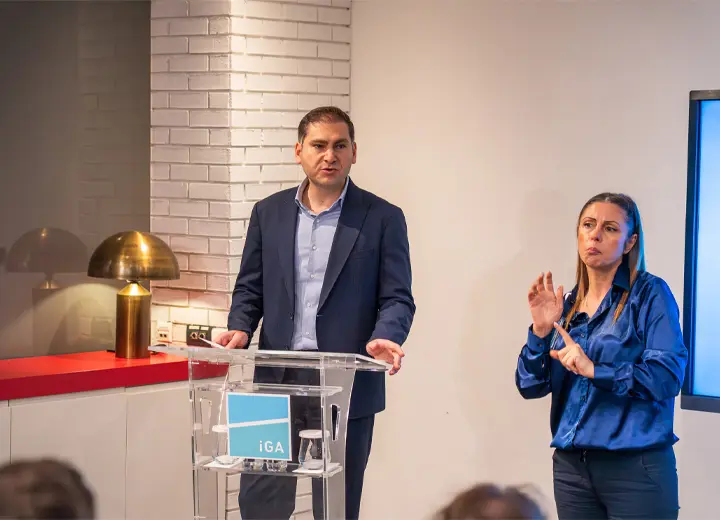
As part of the iGA Accessible Travel Community, our Accessible Travel Roundtable Meeting held on November 25 was one of the most concrete steps in our approach to managing accessibility end-to-end. We brought together our guests from different disability groups, NGO representatives, our stakeholders, and iGA teams to comprehensively address the inclusive airport experience. The meeting was not just a platform for sharing opinions; it created a multi-stakeholder working ground where needs and constraints were clarified, priority solution areas were jointly defined, and a common understanding was strengthened.
Accessible Travel: An Approach that Aligns Standards and Synchronizes Touchpoints
Accessibility is not a single regulation; it is a strategic management approach that brings the end-to-end experience to the same standard. Travel within the airport ecosystem takes place within a multi-actor structure where different institutions, teams, and touchpoints sequentially come into play. Therefore, an accessible experience can only be sustainable if needs are correctly understood and this insight is integrated into processes, communication, and behavioral culture.
Understanding Needs Correctly, Designing Solutions Correctly
The participation of individuals with disabilities and foundations/associations working with individuals with disabilities means not only “receiving feedback” but also reliably establishing the fundamental input for the design. For correctly understood needs to be transformed into experience, operations, security, terminal services, digital channels, and all relevant stakeholders must align around a common language and a common goal. This alignment ensures that accessibility is managed in an integrated manner, not in a fragmented way.
November 25: A Multi-Voiced Sharing Space, a Common Framework
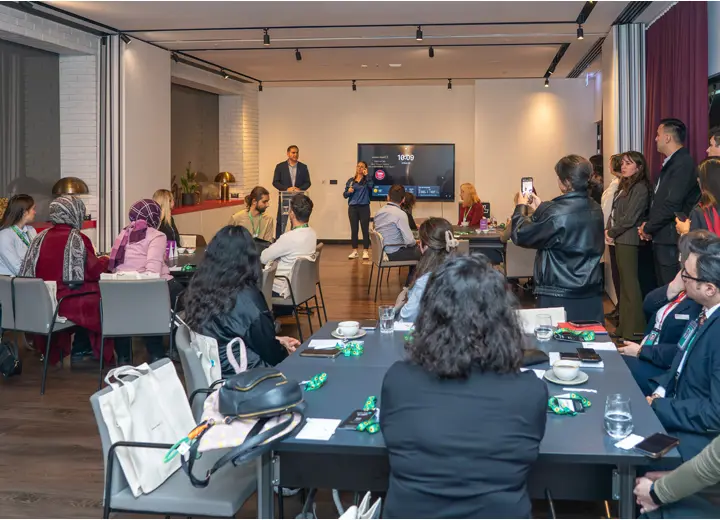
The Accessible Travel Roundtable Meeting we held on November 25 as an event of the iGA Cares Accessible Travel Community was one of the most concrete steps in the field of our approach to managing accessibility end-to-end. We brought together our guests from different disability groups, NGO representatives, our stakeholders, and our iGA teams to comprehensively address the inclusive airport experience. The meeting was not just a platform for sharing opinions; it created a multi-stakeholder working ground where needs and constraints were clarified, priority solution areas were jointly defined, and a common understanding was strengthened.
Our CEO, Selahattin Bilgen, opened the meeting. In his opening speech, he shared that our focus is not limited to process improvements; he also shared our goal of making the behavioral culture that shapes the experience at touchpoints more inclusive, our perspective on accessibility, and the services we offer. Within this framework, our stakeholders had the opportunity to listen to and evaluate service designs from the perspective of different disability groups and based on the experiences of our guests. Our guests gained a clearer understanding of how services are designed at each touchpoint, how responsibilities are shared, and why regulations are decisive in certain applications.
Four Focus Areas, One Goal: End-to-End Consistency
Hidden Disabilities
The prominent need in the context of dyslexia, autism, Down syndrome and chronic illnesses was an experience where stimuli were managed, access to information was simplified, and safe accompaniment during crises was standardized. Under this heading, simplified content, soft lighting and color usage, reduction of triggering crowds, and recommendations on how our employees should safely accompany guests in crisis situations were particularly highlighted. Quiet areas, sunflower lanyard visibility, and pre-flight familiarization programs were other topics where guest needs became even clearer.
Guests with Physical Disabilities
The main point emphasized at this table was that assistance services should be seamless from start to finish. We jointly clarified priority areas for development, such as enabling our guests to use their own wheelchairs for as long as possible, standardizing fall prevention equipment during security and boarding processes, ensuring adequate movement space and accessible toilet facilities on board, and streamlining pre-flight authorization processes for medical devices.
Guests with Visual Impairments
There was a strong consensus here, particularly regarding simplifying the orientation experience. Prominent recommendations included descriptive guide content, audible elevator and door alerts, accessible QR content/menus, priority baggage tags, and reliable push/SMS notifications. A critical reminder for us was this: Clockwise direction, clear reference points, and predictable guidance should be a standard part of our employee behavior model.
Guests with Hearing Impairments
It was strongly emphasized at this table that communication should not be limited to a single channel. Key points included making staff who know sign language visible with badges, increasing subtitles and sign language support in videos, and expanding the use of icons and pictograms in security and boarding processes. The most critical shared expectation was clear: Gate changes must be communicated to passengers not only through announcements, but also via SMS, app notifications, and sign language support when necessary.
Joint Outcomes: Headlines That Transform Accessibility Into a “System”
The outcomes from the four tables demonstrated once again that accessibility is not limited to physical arrangements. It finds its true meaning through empathy, consistency, the simple presentation of information, and a culture of human-centered support.
Key development topics emerging from the meeting:
- End-to-end continuity: Seamless flow in assistance and support services
- Multi-channel communication: Reliable digital and mobile information beyond announcements
- Simplification: Plain language in content, clear references for navigation, and predictability
- Stimulus management: Areas and scenarios where triggers such as crowds/light/sound are reduced
- Behavioral standards: A shared culture of accompanying, giving directions, and approaching crisis situations
- Visibility and awareness: Making sunflower lanyards and sign language proficiency more visible
Integration and Monitoring of the 2026 Accessibility Roadmap
We are carefully incorporating these outputs into our 2026 Accessibility Roadmap. Our goal is to manage feedback not just as “suggestions,” but as an actionable, trackable, and sustainable development cycle. In this context, we are prioritizing steps that will increase consistency in process design, training content, digital communication flows, and field applications.
Acknowledgements and Joint Commitment
Every opinion shared at this meeting has enabled us to take another step towards iGA Istanbul Airport's goal of “an accessible travel experience for everyone.” We would like to thank all our stakeholders, NGO representatives, the Accessible Travel Community, and all our team members who have sincerely accompanied us on this journey for their contributions.
PARTICIPANT COMMENTS
It was a great source of pride for me to be part of this productive experience, where all stakeholders contributed with best practices and solution proposals. With the awareness that development, improvement, and accessibility are a continuous journey, we will continue to innovate and work collaboratively for a more inclusive travel experience.
Wishing for a future where these ideas come to life one by one...
Başak TOPÇUOĞLU - Special Children Education and Solidarity Association (ÖÇED)
I participated in a roundtable meeting organized by the Turkish Muscular Dystrophy Association, where issues concerning people with disabilities were identified and solutions discussed. I found the meeting, organized and hosted by iGA Istanbul Airport, to be exciting. The first reason was that the team consisted of highly conscious individuals who were very good at their jobs. The second reason was the inclusion of NGOs representing all disability groups in this work.
For years, I have been traveling by air both domestically and internationally for my association work. I am familiar with the process of using jet bridges without elevators at Atatürk Airport. During those challenging times, we organized a meeting in Turkey for the European Muscular Dystrophy Network, hosting many people with disabilities from Europe in Yeşilköy. Now, with the new airport, the opportunity to travel without problems will be a great blessing for us.
Fatma ÇOBAN- Chair of the Board of Directors, Turkish Muscular Dystrophy Association
As part of the efforts to bring the ‘Accessible Airport’ mission to life; I would like to express my great pleasure at participating in the workshop held at our pride and joy, iGA Istanbul Airport, which represents our country with great pride and success worldwide, on November 25, 2025. This workshop, planned and carried out under the leadership of a strong team, aimed to meet the needs of our disabled individuals and their companions in the most appropriate way.
As part of the efforts to implement the ‘Accessible Airport’ mission; On November 25, 2025, at our beloved iGA Istanbul Airport, which represents our country with great pride and success around the world, I would like to express my great pleasure in participating in a workshop planned and conducted under the leadership of a strong team to best meet the needs of our disabled individuals and their companions.
Açelya SİVRİKAYA GİRAY- Vice President of the Turkish Dyslexic Children Foundation.
Member of the Board of Directors of the Dyslexia Learning Difficulty Association.
Disability Studies and Child Development Specialist.
The suitability of in-flight transport chairs, the difficulty of seat transfers, the inadequacy of adult changing units, the lack of guidance within terminals, and the heterogeneity of staff knowledge often turn travel into a dependent and exhausting process. Therefore, personalized seat planning, accessible toilet solutions, staff training, and needs-based pre-boarding processes are of critical importance. The shared recommendations shed light on our path not only in terms of physical accessibility but also in making communication, guidance, and the digital experience inclusive.
An “Accessible Digital Passport” compliant with IATA standards, “Quiet Zones” for individuals with sensory sensitivities, interactive airport maps providing real-time visibility of accessible facilities, and mandatory Disability Equality training for all staff.
Accessibility is not a task completed with a single solution; it is a holistic approach based on continuous learning, continuous renewal, and respect for every passenger's experience. Together, we are taking confident steps towards an equal and dignified travel experience for everyone.
Esra ERSOY - Advisor and Expert to the Turkish Grand National Assembly (TBMM) Commission for the Investigation of Issues Concerning Persons with Disabilities.
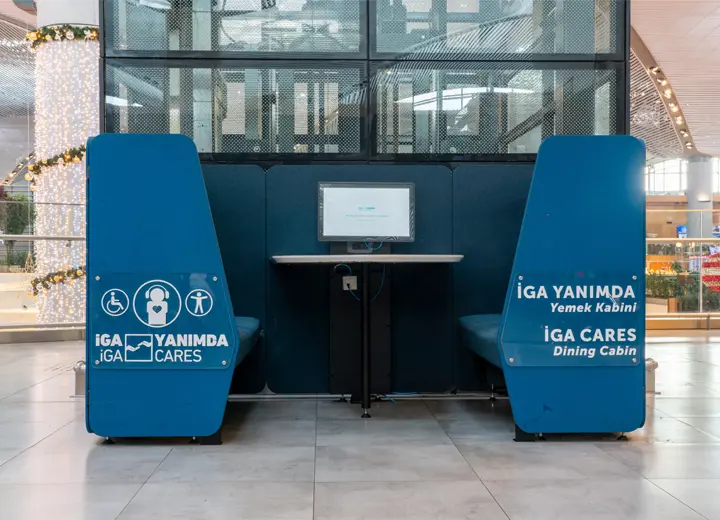
iGA Cares Dining Cabin
As iGA Istanbul Airport, we continue to expand our accessibility services to enhance the travel experience of our guests with different needs. Developed within this scope, the iGA Cares Dining Cabin is specially designed for our guests who need a calmer, more controlled, and private space during meals due to neurological or physical conditions such as Parkinson's, dystonia, cerebral palsy, and similar conditions.
The dining cabins offer a semi-enclosed seating area that allows guests to eat comfortably without feeling overwhelmed by crowds. The ergonomic layout inside the cabin helps minimize involuntary movements or discomfort that may occur while eating and drinking. In addition, informative videos introducing the accessibility services at iGA Istanbul Airport are broadcast on screens inside the cabin to raise awareness among our guests.
The dining cabins are located at the following points:
- Departures (Pre-Passport Area): The dining floor opposite the E-check-in counter.
- International (Departures): The dining area located towards the F flight gates.
- International (Departures): The dining area towards the A-B flight gates.
- Domestic Flights (Departures): Cafe Yanımda, operating with an accessible service approach.
At iGA, our goal is to provide all our guests with a sensitive, inclusive, and comfortable airport experience. The Dining Cabin application is one of the valuable steps taken in line with this vision.
Digital Accessibility
In November 2024, a group set out within Turkish Technology. This was an effort to view inclusivity, universal design, and diversity as strengths. A team was formed and named “Accessibility.” Because we knew that disability is not a deficiency, but part of human diversity.
With this spirit, the digital accessibility transformation began across all subsidiaries of Turkish Airlines. Around May, the AJET website and mobile applications were launched with significantly improved accessibility. Accessibility work on the THY mobile application and web pages gained momentum and is now almost complete.
Our team didn't stop there; we took steps that included numerous training and awareness initiatives to make accessibility an integral part of our processes and corporate culture, from analysis to design, testing, and user feedback, rather than an afterthought.
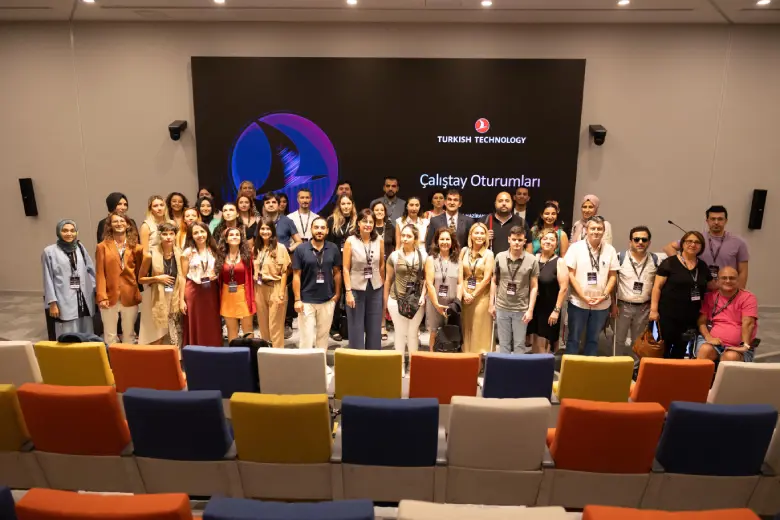
Our belief in accessibility could not be confined within the organization. The Accessible Aviation Workshop was held to make aviation accessible in every way, establishing contact with many stakeholders both inside and outside the organization.
A year of work was crowned with two awards. First, we won the Gold Award in the accessibility category at the Türkiye Customer Experience Awards. By October, AJET received the “Most Accessible Website” award from the Türkiye Accessible Information Technology Platform.
The accessibility team currently consists of six members. Testers, software developers, and internal and external communication specialists have combined their professional experience, individual expertise, and NGO backgrounds. As we have stated from the outset, our team's goal is not merely to meet legal criteria and “pay lip service.” Our true goal is to make aviation in our country and around the world equal, accessible, and barrier-free for everyone, starting with digital processes.
We salute all our friends who are walking and striving to walk the same path with the same goal.
Engin YILMAZ – Turkish Technology Accessibility Team Leader
Havaş: Activities Focused on Inclusion and Accessibility
Strategic Approaches, Best Practices, and Sustainable Development
Our organization embraces inclusion and accessibility as strategic priorities in all areas of activity. At Havaş, we prioritize collaboration and knowledge sharing to create an inclusive work environment, improve service quality, and contribute to social transformation. We develop innovative practices in areas such as accessibility, neurodiversity, gender equality, and volunteering to improve the experience of our employees and passengers.
Through our ÇEK-H (DEI) Committee, composed of representatives from all our group companies, we increase internal awareness on disability and accessibility issues through strategic knowledge sharing with companies from different sectors, on-site best practice reviews, and NGO collaborations; we also contribute to transformation on a national scale.
At the core of our accessibility approach are special training programs that develop our employees' competence and empathetic communication skills. “Special Individuals Awareness Training” programs, prepared with field experts, have been implemented for our security, passenger services, and food and beverage teams who are in direct contact with passengers; the employment and participation of neurodiverse individuals in work processes has been supported.
Our organization is actively participating in programs under the UN Global Compact to enhance institutional capacity aimed at strengthening women's representation and leadership in the workforce. As a concrete demonstration of these activities, our group has signed the Women's Empowerment Principles (WEPs), implemented in collaboration with the United Nations Global Compact and UN Women, committing to adopting an internationally recognized framework for strengthening gender equality in the business world.
Office ergonomics, mobility solutions, portable ramps, and special arrangements tailored to employee needs are among the significant improvements supporting physical accessibility. In addition, accessibility applications have been activated and effectively implemented in all Microsoft Office programs used by our office employees. Our corporate websites continue to be enhanced with accessibility tools (widgets) to ensure our customers have easy access to our services.
Within Havaş, sign language training has been provided to our employees who are in direct contact with passengers; our employees who serve PRM (passengers with reduced mobility) passengers have been supported with special awareness training. Within the scope of partnerships established with municipalities, our employees have had the opportunity to experience the difficulties faced by different disability groups at the municipalities' special awareness centers.
All these efforts contribute to fostering a sustainable culture of inclusivity throughout the organization. Strong connections with internal and external stakeholders, technological solutions, and the social impact created through employee volunteering are propelling our organization toward a more inclusive future. We are committed to continuing to strengthen applications that make life easier for people with disabilities, neurodiverse employees, and all our passengers; to providing a safe, respectful, and accessible service experience for everyone.
Şirin Ayça Sayılır – Havaş Customer Relations Manager
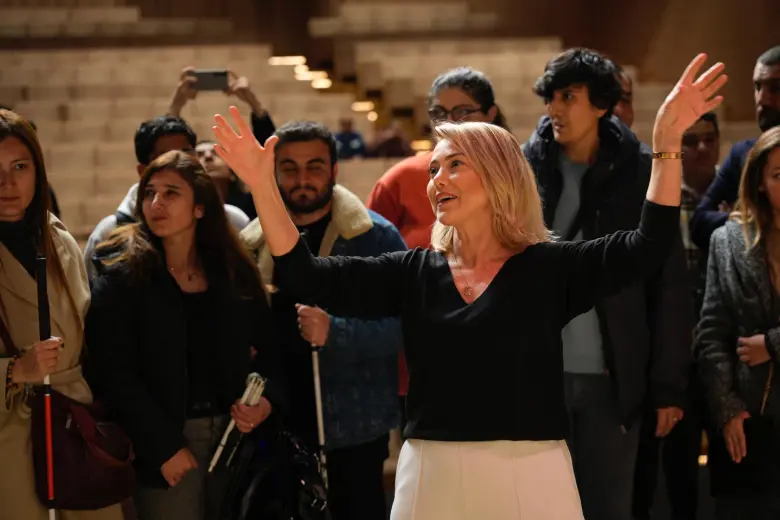
iGA Istanbul Airport and SEBEDER are working towards a world where everyone comes together in the same story.
The Audio Description Association (SEBEDER) is the continuation of a dream started by a group of volunteer students at Boğaziçi University in 2006. That dream was for individuals with visual and hearing impairments to be able to participate in all areas of culture and art; to exist equally with their voices, emotions, and imagination. Today, SEBEDER advocates for accessibility as a human right and works to create an inclusive cultural environment for everyone in order to turn this dream into reality.
The association makes content accessible to everyone through audio description, detailed subtitles, and sign language interpretation in the fields of cinema, theater, museums, concerts, festivals, and education. Having made hundreds of productions and events accessible over the years, SEBEDER continues to build strong partnerships with public institutions, the private sector, and civil society while preserving the spirit of volunteerism.
As one of iGA Istanbul Airport's accessibility solution partners, SEBEDER prepares descriptions of iGA's social media visuals and accessible versions (with audio description, detailed subtitles, and sign language interpretation) of its short videos. With SEBEDER's support, iGA is becoming a true meeting point where different voices, perspectives, and experiences come together.
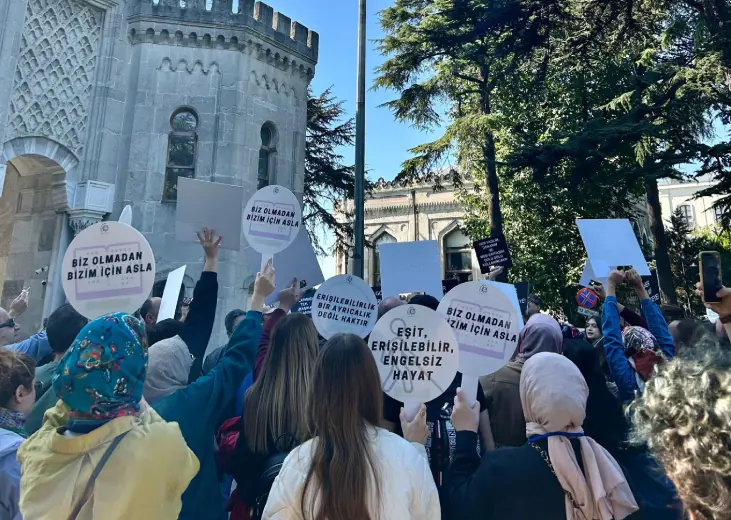
12th White Cane and Accessibility Festival
#InArtInAnInclusiveWay
The White Cane and Accessibility Festival is organized to highlight the importance of accessibility and awareness, ensuring that visually impaired individuals can participate equally in social life. Held annually since 2014 by the Association of Barrier-Free Access around October 15th—International White Cane Safety Day—the festival emphasizes that accessibility is not just a need, but a shared responsibility for all segments of society.
The festival’s starting point is the idea that the white cane is not merely a mobility tool, but a symbol of independence and social participation. The Association of Barrier-Free Access was founded in 2005 by young blind activists driven by the desire to have a voice in their own lives. Since its inception, the association has aimed to make accessibility an approach that everyone can recognize and embrace in daily life. The festival stands out as one of the most visible examples of this vision.
This year, the 12th White Cane and Accessibility Festival was held on October 10–11, 2025, at Istanbul University Beyazıt Campus, in collaboration with the Centre for Disability Research and Education (ENUYGAR). Organized under the theme of "Art" and the motto #InArtInAnInclusiveWay, the two-day event showcased accessible practices in art, technology, education, games, and daily life. Hundreds of participants from universities, NGOs, and various cities came together to witness how accessibility can be integrated into every aspect of life.
The festival grounds featured music performances, accessible art workshops, digital applications, Braille materials, and stalls for handicrafts and carpentry. Participants had the opportunity to experience firsthand:
- How mind games can be played in accessible formats.
- Which accessible methods are used in jewelry making.
- How to work on a computer using a screen reader.
- How meals are prepared in the kitchen.
- How the structure of a building can be examined using 3D models.
Through these experiences, visitors directly witnessed that accessibility is not just a concept, but a culture and a fundamental human right reflected in all areas of life. The goal of the White Cane and Accessibility Festival is to go beyond talking about accessibility and make it a natural element of daily life. This annual gathering serves as a reminder that accessibility and awareness can become a common language for society, proving that everyone can be a part of this transformation.